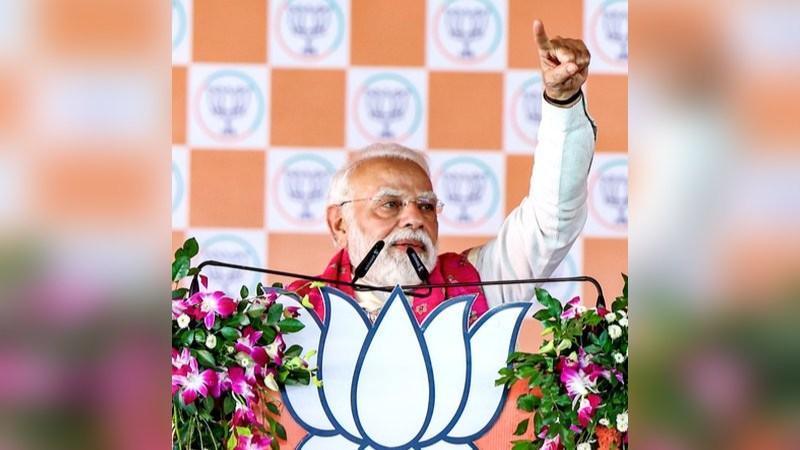
Kolkata: Prime Minister Narendra Modi is set to visit West Bengal on December 20 to launch a major political campaign focusing on the citizenship concerns of the Matua community. The rally, planned in Ranaghat in Nadia district, aims to counter the Trinamool Congress’ allegations surrounding the ongoing Special Intensive Revision (SIR) of electoral rolls.
The Trinamool Congress has accused the Election Commission of removing the names of many Matua voters from voter lists, warning that the revision could lead to disenfranchisement and ultimately questions over citizenship status. BJP leaders, however, argue that these claims are misleading and politically motivated.
A senior state committee member of the BJP confirmed that December 20 has been chosen as the tentative date for the high-profile rally. Ranaghat, one of the community’s strongholds, is seen as a strategically significant choice. The other key Matua-dominated region is Bangaon in North 24 Parganas. Both regions share borders with Bangladesh and have a substantial population of Matua voters.
The Ranaghat Lok Sabha constituency is currently represented by BJP MP Jagannath Sarkar, who secured the seat in both 2019 and 2024, with Matua support playing a decisive role in his victories.
The Matua community consists largely of Dalit Hindu refugees who migrated to West Bengal from Bangladesh due to religious persecution. Their sizable presence in border districts has made them a crucial political force in state elections. Since the 2019 Lok Sabha polls, a significant portion of the community has backed the BJP, influenced largely by the party’s stance on citizenship rights for Hindu refugees.
With West Bengal heading toward Assembly elections next year, political analysts believe that winning constituencies with strong Matua voter bases — especially in Nadia and North 24 Parganas — is key for the BJP if it wishes to emerge victorious and form the next state government.
Observers suggest that the early commencement of BJP’s election campaign, led by the Prime Minister himself, signals the party’s determination to keep momentum after its recent electoral successes. The BJP has been projecting the message — “After Odisha in 2024 and Bihar in 2025, it will be West Bengal in 2026” — reflecting its ambition to expand governance into newer states.
By choosing Ranaghat as the launchpad, party strategists aim to reinforce trust among Matua voters and challenge the Trinamool’s narrative on citizenship and voter security.

The December rally is expected to feature strong messaging around the Centre’s commitment to safeguarding the rights of Hindu refugees under the Citizenship Amendment Act (CAA) and ensuring that Matua voters face no threat to their democratic participation.
As election season draws closer, the Matua citizenship issue is set to become one of the central themes of the political battle in West Bengal — with both BJP and Trinamool Congress making their case to one of the state’s most influential communities.