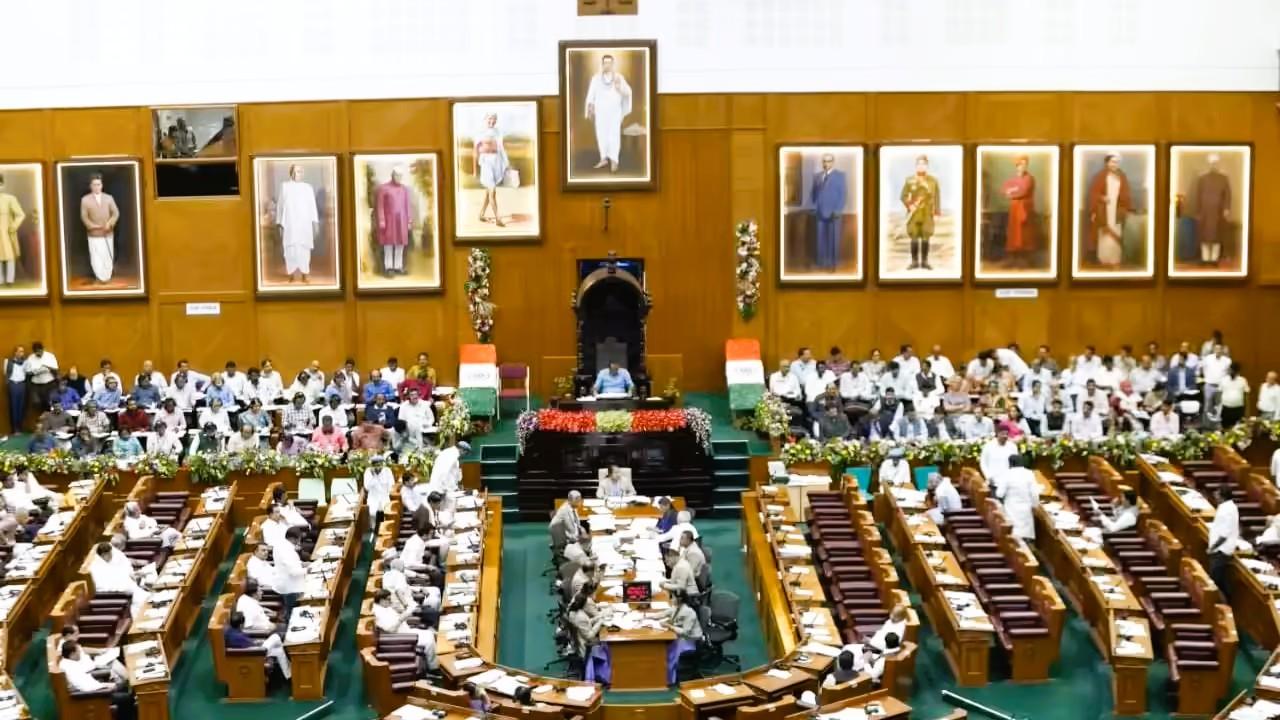
Belagavi: The Karnataka government on Wednesday placed before the Legislative Assembly a far-reaching bill designed to tackle hate speech and hate crimes, becoming the first state in India to propose a standalone law for this purpose. Home Minister G. Parameshwara introduced The Karnataka Hate Speech and Hate Crime (Prevention) Bill amid loud objections and disruptions from BJP lawmakers.
The Bill seeks to criminalise a wide spectrum of hate-driven communication and conduct, with stringent punishments for those found guilty. According to the proposal, all offences under the Bill would be treated as cognisable and non-bailable, giving the police wider authority to act without requiring warrants.
Scope of the Bill
The legislation defines hate speech as any spoken, written, or visual expression intended to provoke injury, hostility, disharmony, enmity, or hatred against an individual or group. It lists several protected categories, including religion, caste, race, gender, sexual orientation, language, disability, and tribe.
In addition to direct acts of hate speech, the Bill classifies the promotion, abetment, or incitement of such conduct as hate crimes, bringing those actions under the same legal framework. The government argues that this comprehensive approach is needed to prevent the spread of divisive content and ensure public order.

Proposed Penalties
The draft legislation outlines different levels of punishment based on the severity and frequency of offences. First-time violators would face imprisonment ranging from one to seven years, along with a possible fine of up to ₹50,000. Repeat offenders could be sentenced to a minimum of two years and up to 10 years in prison, and fines could extend to ₹1 lakh.
Officials say the harsher penalties for recurring violations are intended to deter habitual offenders and reinforce the seriousness of the law.

Government’s Rationale and Enforcement Measures
Deputy Chief Minister D.K. Shivakumar defended the Bill during the session, asserting that the state “cannot allow hate speech” and must take firm steps to preserve peace. He maintained that the legislation is essential for preventing conflicts and maintaining social harmony.
To strengthen enforcement, the Bill empowers Executive Magistrates and senior police officers to initiate preventive measures whenever necessary. It also authorises the state government to direct social media intermediaries and service providers to remove or block hate content on their platforms. According to the government, these provisions are crucial for addressing online hate speech, which often spreads rapidly and reaches a wide audience.
BJP Stages Strong Protest
The introduction of the Bill prompted a vigorous protest from BJP legislators, who accused the Congress-led government of undermining free expression. Members of the opposition repeatedly interrupted proceedings, shouting objections and demanding a division of votes before the Bill could be tabled.
Leader of the Opposition R. Ashoka alleged that the government was “obsessed” with controlling dissent and claimed that the legislation was designed to silence political opponents rather than address genuine concerns about hate speech. Several BJP leaders echoed this view, arguing that the Bill threatens democratic values.
BJP MLC Chalavadi Narayanaswamy contended that complaints filed by BJP members often fail to result in FIRs, while their social media posts are met with swift police action. He claimed the proposed law could intensify what he referred to as selective enforcement.
Despite the uproar, Speaker U.T. Khader permitted the Home Minister to go ahead and table the Bill, setting the stage for further debate when it comes up for discussion and passage.