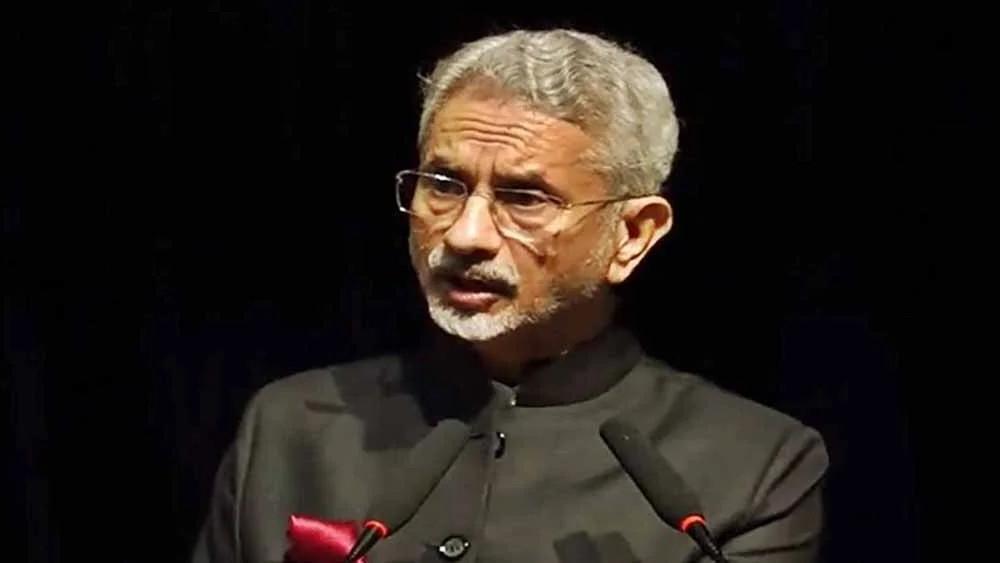
Kolkata: External Affairs Minister S. Jaishankar on Friday said that the world is witnessing a shift where political priorities are increasingly overtaking economic considerations in shaping global interactions. He noted that international relations today are defined more by strategic interests and geopolitical realignments than by traditional economic cooperation.
Jaishankar was addressing an audience in Kolkata after being conferred an Honorary Doctorate by the Indian Institute of Management Calcutta. During his remarks, he highlighted a rapidly evolving global environment in which nations are reassessing alliances and focusing more on safeguarding their own strategic goals.
According to the Minister, global power dynamics have entered a period of heightened competition. He pointed out that the United States has moved towards dealing with countries on a bilateral basis, rather than supporting a uniform global system that governed the past decades. This shift, he said, signals a broader breakdown of multilateral frameworks that once played a central role in regulating global economic behaviour.
Jaishankar also referred to China, stating that Beijing continues to pursue policies rooted in its own priorities rather than adhering to widely accepted global norms. This divergence, combined with economic and security risks emerging in multiple regions, has led countries to adopt more cautious and protective approaches.
“This is an era where politics increasingly trumps economics,”
— External Affairs Minister S. Jaishankar

He noted that uncertainties across the world — from supply chain disruptions and technological competition to regional conflicts — have encouraged governments to hedge risks and limit dependence on external systems. As a result, nations are giving greater importance to political strategy while restructuring economic engagements.
India’s Policy Response

Speaking on India’s current direction, Jaishankar emphasized that the country is strengthening its internal capabilities in response to this global transformation. He said that self-reliance, particularly in manufacturing and key sectors like infrastructure and science, is becoming central to national progress.
He reiterated that building stronger domestic foundations will not only make India more resilient to global instability but also enhance its role as a reliable partner in international collaborations. Strategic economic initiatives, he said, are now increasingly aligned with India’s security and technological priorities.
Jaishankar explained that India’s development model aims to reduce vulnerabilities in critical areas, promote innovation, and elevate the country’s standing as a secure and independent economy that can weather global uncertainties.
Strategic Outlook Ahead
The Minister’s comments reflect broader debates unfolding worldwide regarding the future of globalization, supply chain restructuring and geopolitical shifts. He noted that countries must balance economic interests with long‑term national security and stability.
Jaishankar concluded by stating that India will continue to chart its own growth path while engaging constructively with the world, but with clearer priorities driven by national interests.
The event at IIM Calcutta included faculty, students, and dignitaries who congratulated the External Affairs Minister on receiving the honorary recognition for his contributions to diplomacy and public service.