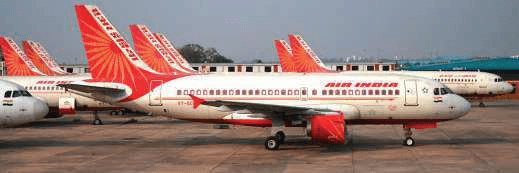
Mumbai/ New Delhi: The financial consequences of the ongoing conflict in West Asia are yet to be fully realised, according to Campbell Wilson, Chief Executive Officer of Air India, who highlighted significant disruptions to airline operations.
Wilson said the airline group has already cancelled around 2,500 flights over the past three weeks due to the evolving situation in the region. The disruption has been primarily caused by restricted airspace and closures of key airports across West Asia.

As a result, Air India is currently operating only about 30 per cent of its usual Middle East schedule. The reduced capacity reflects ongoing operational challenges faced by airlines navigating the volatile environment.
The CEO noted that while the immediate impact is visible in cancellations and route adjustments, the larger financial burden is expected to become more evident from next month. He indicated that the current situation has created a lag effect, where cost pressures and revenue losses will be reflected more clearly over time.
One of the major concerns highlighted was the sharp increase in jet fuel prices, which have more than doubled amid the conflict. Rising fuel costs are a critical factor for airlines, significantly affecting operating expenses and overall profitability.

Wilson said both Air India and Air India Express are experiencing challenges similar to those faced by other global carriers. Airlines operating in or through the region have had to adjust routes, manage delays, and deal with increased costs.
The disruptions are not limited to flight cancellations but also include logistical complexities and scheduling adjustments. Airlines are required to reroute flights to avoid restricted airspace, leading to longer travel times and higher fuel consumption.
Industry observers note that the aviation sector is particularly sensitive to geopolitical developments, especially in regions that serve as major transit hubs. West Asia plays a crucial role in global aviation routes, and any disruption in the area has widespread implications.

The ongoing conflict has created uncertainty for airlines planning their operations, with limited visibility on how long the restrictions will continue. This uncertainty is making it difficult for carriers to stabilise schedules and manage costs effectively.
Wilson indicated that if the situation persists, the stress on the aviation sector could intensify. Airlines may continue to face operational constraints and rising expenses, affecting both domestic and international travel networks.
The impact is also being felt across the broader airline industry, as multiple carriers adjust to the changing conditions. Reduced capacity and increased operational costs are likely to influence ticket pricing and service availability in the coming weeks.
While immediate disruptions are already visible, the CEO emphasised that the full financial implications will become clearer as airlines assess the cumulative impact of cancellations, fuel costs and operational changes.
The aviation sector continues to monitor developments closely, as the duration and scale of the conflict will play a key role in determining the extent of its impact on global air travel.