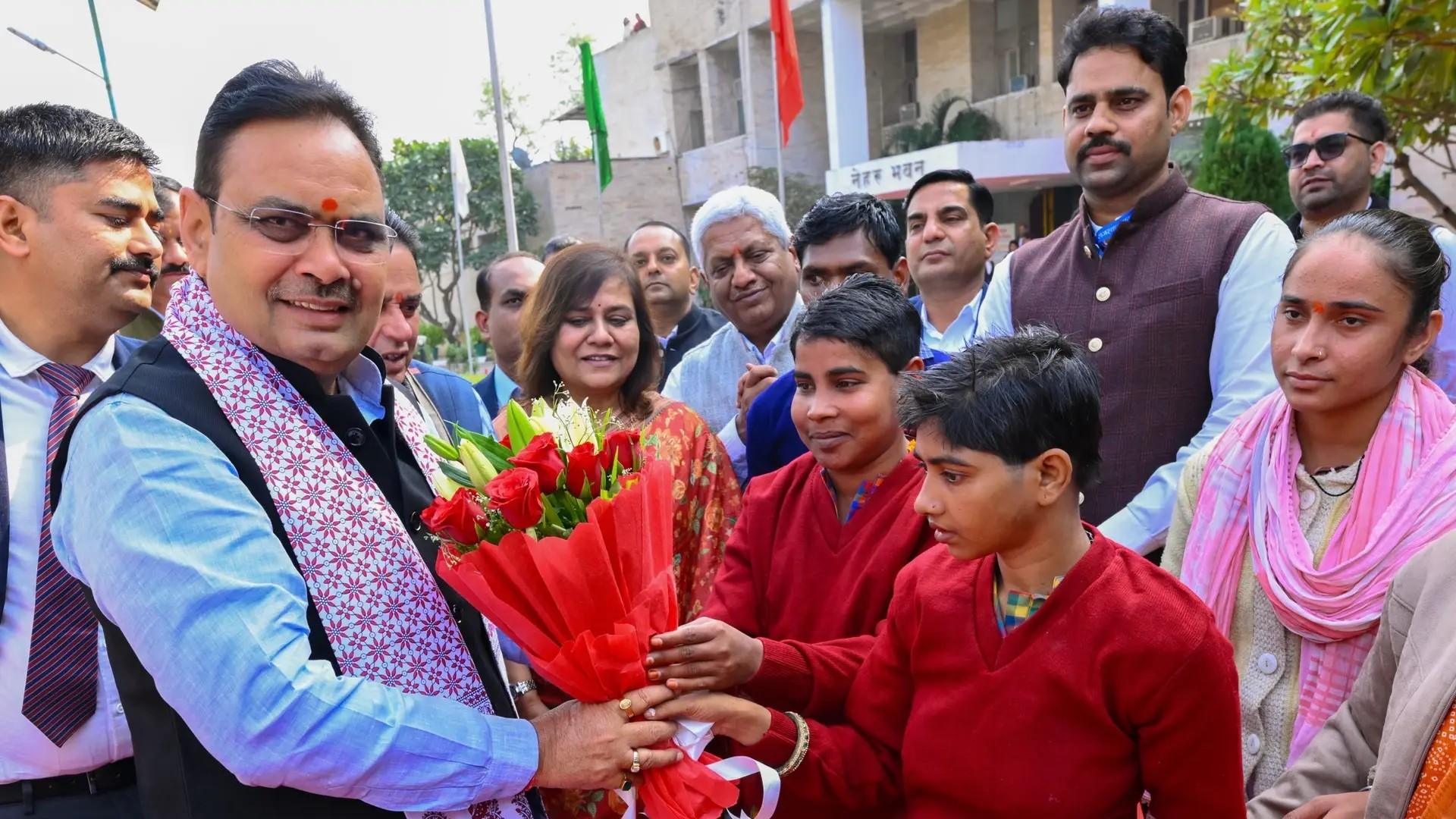
Jaipur: In a significant push toward greater social inclusion, the state government of Rajasthan held a major disability-inclusion event today, where the Chief Minister distributed a range of assistive devices to beneficiaries.
At the event, smartphones, hearing aids, smart canes, and mobility aids were handed over to persons with disabilities, aiming to improve accessibility and support independent living. The distribution was part of a broader initiative to ensure that individuals with disabilities receive tools to help navigate daily life more easily and with dignity.

The event was also marked by an exhibition featuring products crafted by persons with disabilities themselves. Government officials at senior levels attended the showcase, drawing attention to the skills and entrepreneurship of disabled persons in producing useful and marketable items. This dual focus — on empowerment through devices and recognition of self-reliance — underscores the government’s commitment to fostering inclusivity.
Officials described the exercise as a step toward enabling social and economic participation for individuals with disabilities. By providing essential technology and mobility support, the government hopes to reduce barriers in communication, mobility, and access to information. The exhibition component also offered a platform for disabled artisans and entrepreneurs to display their craftsmanship and reach a broader audience.
The distribution and exhibition event come amid rising awareness across the state about the need for inclusivity and equal opportunity for all citizens. The government’s move may also help shift social perceptions, encouraging society to view individuals with disabilities as active contributors with skills, talent, and agency — rather than as mere beneficiaries.
For many recipients, the smartphones and assistive devices can open doors to improved communication, access to information, education, and employment possibilities. Smart canes and mobility aids provide enhanced independence and safety, while hearing aids address communication barriers. Together, these tools can contribute significantly to quality of life and societal integration.
This initiative reflects a growing trend toward inclusive governance — one that recognizes the rights and dignity of every citizen, regardless of physical or sensory disability. It also sends a message that government institutions aim to provide not just welfare, but real empowerment.
As the programme rolls out, it remains to be seen how widely and consistently it will reach individuals across urban and rural areas of the state. Monitoring follow-up support, maintenance of devices, and broader social inclusion will be essential to ensure long-term impact.