New Delhi / Moscow: Russian President Vladimir Putin’s state visit to India this week has underlined a key strategic message: India intends to shape its foreign policy on its own terms, resisting external pressure to alter its long-standing ties with Moscow. Analysts say the two-day summit showcased India’s resolve to strengthen a relationship that remains vital to its defence and energy security.
Putin arrived in New Delhi for the 23rd India–Russia Annual Summit at a time when international scrutiny of Russia is intense due to continuing Western sanctions. The visit coincides with complex global shifts — growing rivalry between the United States and China, and the evolving India–US partnership in technology and trade.
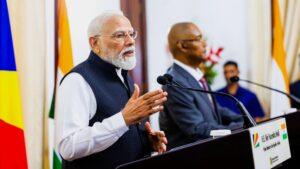
Official receptions at Rajghat, ceremonial honours at Rashtrapati Bhavan, and multiple high-level dialogues reflected the importance New Delhi places on the bilateral partnership. Experts argue that India sought to send a clear signal that Russia is not a secondary or symbolic partner, but a central pillar of its strategic framework.
Commentators note that the optics of the visit counter the assumption in some Western circles that India will eventually align itself fully with US strategic choices — including sanctions and coalition commitments. Instead, New Delhi is signaling a balanced model: close collaboration with the US, while maintaining sovereignty over decisions involving Russia and other Global South partners.
Defence Ties Remain Strong

Defence cooperation remains the cornerstone of India–Russia relations. India continues to depend heavily on Russian-origin platforms, which make up a significant portion of its arsenal. Deliveries of the S-400 air defence system — a crucial layer in India’s protection against regional threats — are ongoing and remain unaffected by Western pressure.
The summit highlighted a shift toward deeper industrial collaboration — focusing not just on acquisitions but also co-development, local manufacturing, maintenance and upgrades. Discussions reportedly included cooperation in advanced propulsion, unmanned systems, and next-generation technologies such as hypersonics.
Energy Partnership Insulated from Geopolitics
A major theme of the visit was continued cooperation in the energy sector. Russia is expected to remain a reliable supplier of crude oil and fuel to India at competitive rates, ensuring energy security despite global volatility.
Officials emphasized that this partnership contributes to stabilizing India’s economic growth, particularly at a time when global energy prices remain sensitive to geopolitical tensions.
Strategic Balance, Not Alignment
Observers argue that Washington’s attempts to test India’s reliability by pushing it to distance itself from Moscow overlook the broader logic of New Delhi’s strategy. India relies on Russian support in regions like Central Asia, while simultaneously expanding cooperation with the US in defence technology, semiconductors and the Indo-Pacific.
Analysts believe that forcing India to abandon Russia would not make it more aligned with American interests — rather, it could push India toward a more traditional non-aligned posture that reduces Western influence.
India’s Message: Independent and Multipolar
Putin’s visit has reinforced India’s long-standing doctrine of strategic autonomy — a principle that allows strong ties with multiple partners without being constrained by global blocs. For New Delhi, maintaining strong Russia relations is a matter of both national interest and geopolitical balance.
As global power dynamics continue to shift, India appears intent on showing that partnerships will be driven by its own priorities — not by pressure from any single country or alliance.