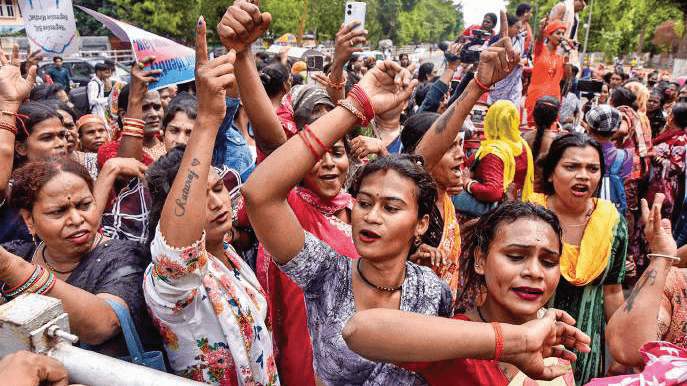
New Delhi: Transgender rights activists on Monday demanded the complete withdrawal of the proposed Transgender Persons (Protection of Rights) Amendment Bill, 2026, stating that the legislation could adversely affect the rights, dignity and identity of the community.
The Bill was introduced in the Lok Sabha by Union Minister Virendra Kumar last week. Activists, however, said they do not seek amendments but want the proposed law to be scrapped in its entirety.

Addressing a press conference, Raghavi S, the first transgender woman to practise as a lawyer in the Supreme Court, said the community’s demand is not for minor revisions. “Our demand is not for minor changes in the Bill. We want it to be taken back as it is,” she said.
Raghavi highlighted the challenges faced by transgender individuals in everyday life, particularly in obtaining identity documents. She said that even basic administrative processes can take several years, making access to rights and benefits difficult.
She further argued that the proposed amendments could reverse progress achieved after years of struggle for recognition and inclusion. According to her, the changes could result in reduced opportunities, limited access to healthcare, and increased vulnerability to violence and discrimination.

Raghavi also raised concerns that the Bill removes the right to self-determination of gender identity, a principle recognised by the Supreme Court in the NALSA vs Union of India case. She stated that restricting this right would narrow the definition of transgender identity and exclude certain groups.
Another issue highlighted was the inclusion of intersex persons within the definition of transgender persons, removing their distinct recognition. Activists argued that this change could affect both legal clarity and access to specific protections.
Raghavi also criticised what she described as “medical gatekeeping” under the proposed framework. She said the Bill requires individuals to undergo medical procedures, appear before a medical board, and obtain approval from a district magistrate, potentially creating additional bureaucratic hurdles.

Ritu, another activist, expressed concern over what she termed continuous oversight of transgender individuals under the proposed law. She emphasised that the right to determine one’s gender identity is a matter of personal liberty and dignity, protected under the Constitution.
Krishanu stated that the amendments alter the definition of who can be recognised as transgender and merge intersex persons into the same category. He said this approach contradicts the principles laid down in the NALSA judgment.
Krishanu also pointed out that the language of the Bill suggests that transgender identity could result from external influence, a notion he described as problematic. He further alleged that members of the transgender community were not consulted during the drafting of the Bill.
Kabir Maan, a transman activist, shared personal experiences of discrimination despite holding official identity documents. He said barriers persist in areas such as education and employment, where identity continues to be a challenge.
Separately, Anish Gawande, a leader of the Nationalist Congress Party (Sharad Pawar faction), also called for the withdrawal of the Bill. He described it as “misguided” and said it weakens the constitutionally recognised right to self-determination of gender identity.
Gawande referred to both the NALSA judgment and the 2019 Act, which allowed transgender persons to identify their gender without mandatory medical procedures. He stated that the proposed amendments contradict these principles.
He also noted that despite policy efforts, many transgender individuals continue to face marginalisation, often lacking access to housing, healthcare, education and employment opportunities.
The issue has sparked broader discussions around rights, identity and inclusivity, with activists urging the government to reconsider the proposed legislation. The matter remains under public and political debate.