New Delhi: The Supreme Court on Monday underscored that Delhi-NCR’s escalating air pollution cannot be dismissed as a problem confined to the winter season, while firmly cautioning authorities against unfairly placing blame on farmers for the region’s deteriorating air quality. The observation came as the court reviewed the persistent public health emergency affecting the national capital and surrounding areas.
A bench led by Chief Justice Surya Kant expressed concern over the long-standing tendency to focus primarily on stubble burning as the main culprit behind hazardous air pollution levels. The judges noted that such a narrow approach fails to address the complex and multi-source nature of the issue. Instead, they insisted that responsibility must be evaluated across all major contributing sectors, including vehicular emissions, industrial operations, and dust from roads and construction.
“We cannot treat this crisis as something that only arises in the winter months,” the bench remarked, highlighting that pollution levels often remain poor throughout the year. The court pointed out that interventions must be both comprehensive and continuous if the national capital region is to see meaningful improvement.
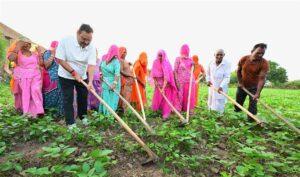
Stating that farmers are not represented before the court in the current proceedings, the bench emphasized the need for sensitivity while tackling stubble burning concerns. The judges remarked that those working in the agricultural sector, many from rural and economically vulnerable communities, must not be converted into “scapegoats” for a widespread environmental challenge. They reiterated that any action directed at farmers should be balanced and based on support rather than punishment.
The court turned its attention to the government and pollution control authorities, directing them to provide clarity on the strategies currently in place. It asked the Centre to furnish detailed information on efforts undertaken by various regulatory bodies, with particular focus on controlling vehicle-related emissions — a major contributor to particulate matter in the region. The bench also sought updates on dust mitigation, industrial compliance, and enforcement against violators.
During the hearing, the judges noted that despite years of court interventions, advisory campaigns, and regulations, the residents of Delhi and neighboring districts continue to breathe toxic air. The bench said that repeated cycles of public outcry followed by short-term emergency measures were no longer acceptable, and that authorities must pursue systemic, sustained solutions.
The court suggested that without accountability and continuous monitoring, policies tend to remain on paper, resulting in little practical relief on the ground. It stressed that pollution control mechanisms must be evaluated for their effectiveness rather than their mere existence.
The hearing concluded with the court asking the Centre to present a comprehensive report at the next session, scheduled for December 10. The report is expected to include specific steps taken by state governments and pollution regulators across Delhi, Haryana, Punjab, and Uttar Pradesh — the primary jurisdictions that fall under the NCR footprint.

The judges also indicated that future directions may be issued after reviewing the government’s submissions and assessing gaps in the current approach. Their observations signaled a strong likelihood of additional compliance monitoring mechanisms being put in place if the situation continues to worsen.
As Delhi-NCR struggles through yet another season of smog-filled skies and hazardous air quality warnings, the Supreme Court’s remarks add renewed pressure on policymakers to broaden their pollution response and avoid oversimplified narratives that attribute blame to a single group.