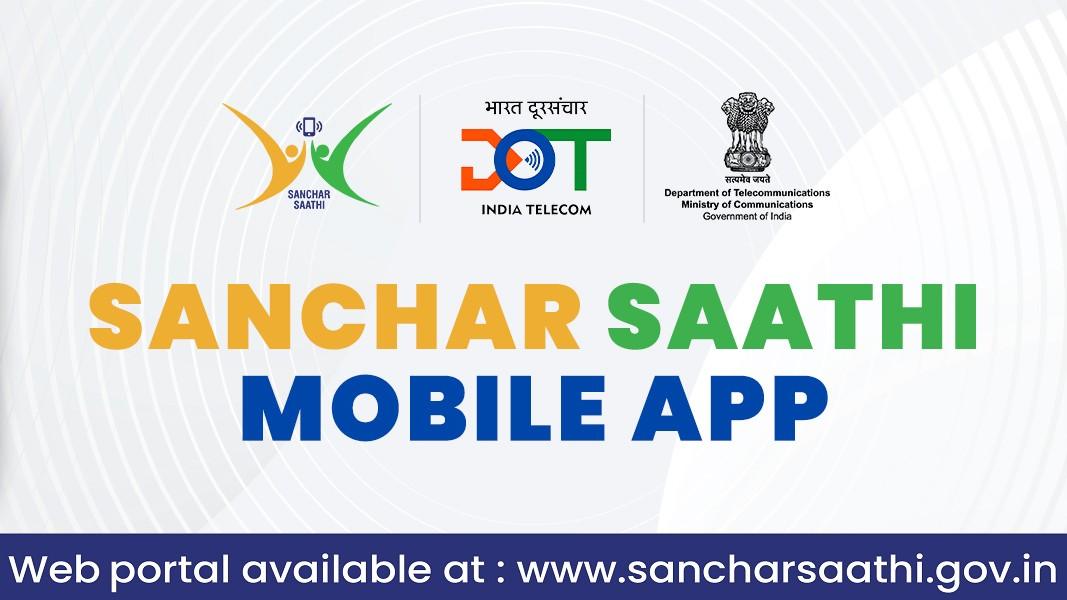
New Delhi: The Union government has clarified that its Sanchar Saathi cybersecurity application, which is to be pre-installed on all smartphones in India, will not be compulsory for users. The assurance follows widespread concerns that the app could pave the way for surveillance and intrusive access to personal data.
Communications Minister Jyotiraditya Scindia stated that smartphone owners will remain free to remove the app from their devices if they do not wish to use it. His comments were aimed at addressing a backlash that erupted soon after the rollout plan was announced. Several opposition parties and digital rights advocates had alleged that embedding the application into devices could compromise privacy and give authorities broad access to information stored on phones.

Critics argued that the app’s permissions could allow monitoring of calls, SMS messages, cameras and even device logs, generating fears of potential misuse. They contended that even the act of installing the app by default would signal an attempt to institute surveillance measures under the guise of cyber protection.
According to the concerns raised, features within the app might enable detailed tracking of user activity, including communication patterns. Activists warned that such access, if unregulated or poorly monitored, could put citizens’ sensitive information at risk. They also questioned whether users would truly have control over enabling or disabling the app’s functions once it becomes a default system feature.
However, government officials have firmly rejected any allegations of snooping. They maintain that the requirement for pre-installation is rooted solely in efforts to tackle cybercrime and prevent the misuse of IMEI numbers — the unique identifiers that help track mobile devices. Officials stressed that the objective of Sanchar Saathi is to protect consumers from fraud and to ensure that lost or stolen phones can be identified effectively.

Industry reports suggest that compliance with the directive must take place within 120 days. This timeline applies to all smartphone manufacturers operating in India. The move is seen as part of a broader initiative to strengthen national cybersecurity frameworks and enhance consumer safety in digital communications.
Discussions reportedly continue between the Centre and major tech companies, including Apple, over how best to implement the requirement. Smartphone makers are said to be seeking clarity about the technical aspects of embedding the app within operating systems, particularly in ways that would not interfere with device performance or software design.
Industry experts have noted that while the minister’s assurance is welcome, it is equally important for the government to issue explicit written guidelines guaranteeing users’ right to delete the app without restrictions. They highlight concerns that deep integration at the operating system level could still create practical barriers to removal, even if not formally mandated.

There has also been a call for precise information regarding the data the app may collect and how such data would be stored or processed. Transparency, they argue, is essential to ensure that public confidence does not erode in the face of new digital regulations.
With the smartphone ecosystem continuing to expand rapidly across India, both policy makers and citizens are focused on balancing innovation with individual privacy. The government insists Sanchar Saathi will function as a tool for security and convenience. Yet, the public discussion that has unfolded reflects a broader debate over data rights and the limits of state intervention in personal technology.
As Phone manufacturers work toward compliance within the stipulated 120-day window, the next steps — especially regarding deletion rights and app permissions — are expected to determine how smoothly the rollout proceeds and whether concerns can be effectively addressed.