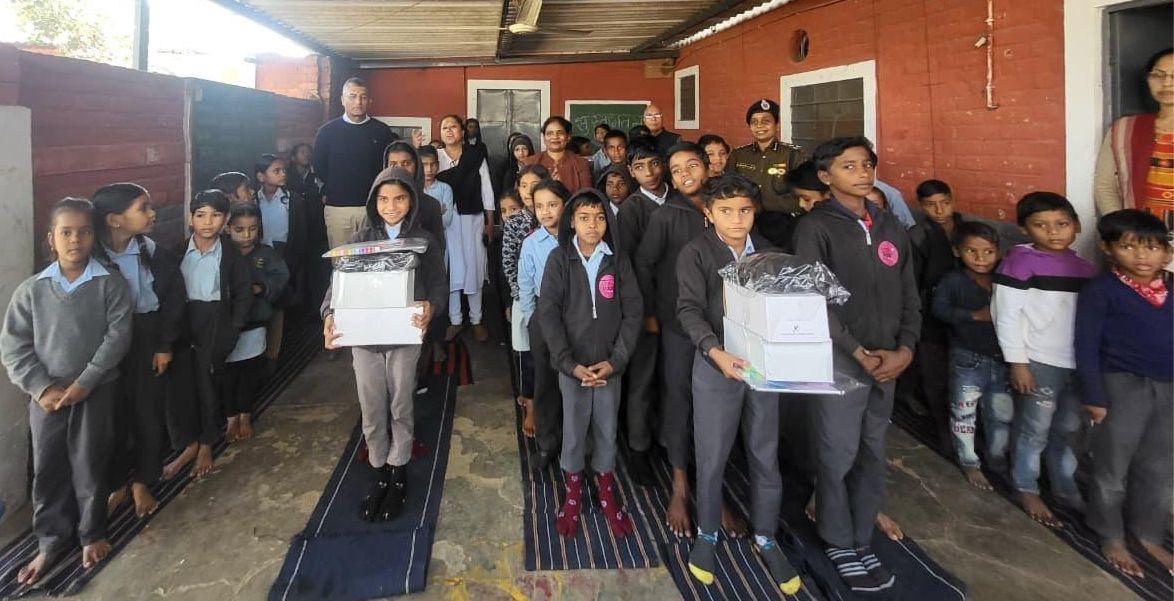
Jaipur: Prison Aid + Action Research (PAAR) organized its fifth consecutive winter essentials distribution drive on Wednesday at the Sampoornanand Khulla Bandi Shivir, widely known as Sanganer Open Prison. The initiative supports the wellbeing and development of children living inside the open prison campus alongside their parents.
The drive included distribution of warm hoodies, school shoes and casual sneakers to help children stay comfortable through the winter months. For the first time, PAAR also supplied a range of stationery items, including pencils and colouring kits, encouraging young learners to pursue creative expression and artistic interests.

The program was attended by Ashok Kumar Rathore, Director General of the Rajasthan Prison Department, who personally interacted with children and handed over the winter packages. His visit drew attention to the collaborative efforts between PAAR and the prison department to champion humane and community-oriented correctional practices.
Mr. Rathore carries extensive experience in policing and security operations, having served as Chief of the Special Operations Group and Anti-Terrorist Squad, Additional Director General (Training), Additional Director General (Vigilance), and Commissioner of Police in Jodhpur. His presence at the event reinforced the administration’s support for welfare-driven reforms within the prison system.
PAAR’s Founder, Smita Chakraburtty, accompanied the DG Prisons during a walkthrough of the Sanganer Open Prison campus. The two reviewed the rehabilitative programs and infrastructure that allow families to live together while inmates work toward reintegration into society. The open-prison model transforms confinement into an opportunity for responsibility, dignity and societal contribution.

The children at Sanganer Open Prison attend school and Anganwadi services located within the campus. The environment encourages them to learn without stigma and socialize with peers from the wider community. PAAR continues to advocate for such progressive models, highlighting them as examples of inclusivity that uplift inmates’ families—particularly young children who are among the most vulnerable.
By combining essential support with educational and creative resources, PAAR’s winter drive aims to nurture confidence and ambition in children who often remain unseen despite their unique challenges. Staff emphasized that these small interventions can create meaningful differences in shaping their personal and academic journeys.
Marking five years of the initiative, PAAR reaffirmed its mission to expand these efforts and collaborate with state institutions to bring child-centric prison reforms to more regions. The organization believes that open prison ecosystems — where rehabilitation is prioritized over isolation — can strengthen communities and reduce social stigmas attached to incarceration.

The event concluded with messages of encouragement for the children and appreciation for PAAR’s ongoing commitment to humane correctional practices.