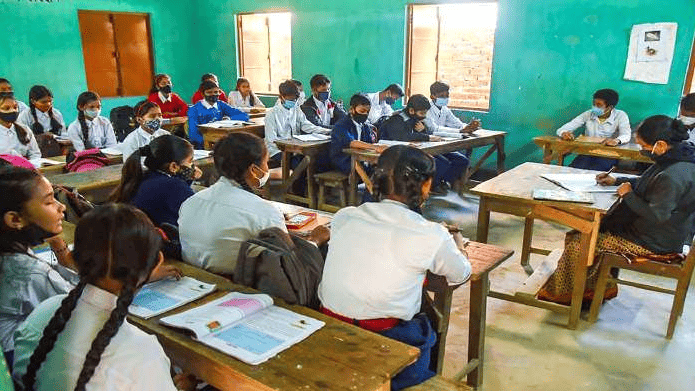
New Delhi: Growing public outrage over a series of student suicides has prompted mental health specialists and parents’ associations to call for sweeping reforms in school systems, arguing that institutions must become better equipped to support psychological well-being and prevent further tragedies.
The latest incident involved a Class 10 student from St Columba’s School in New Delhi who died by suicide on Tuesday after allegedly facing months of harassment by teachers. The teenager, who once dreamed of becoming “the next Shah Rukh Khan”, jumped from the Rajendra Place Metro station platform, triggering a nationwide debate over school accountability and student safety.
While public opinion remains sharply divided, mental health expert Neha Kirpal warned against reducing the issue to a simple battle between parents and schools. “Suicidality is everyone’s responsibility,” she said, stressing that teachers, families, caregivers, school staff and the wider community all play a crucial role.
Kirpal, co-founder of Amaha Health and the India Mental Health Alliance, said suicidal behaviour rarely occurs suddenly, and early warning signs often go unnoticed. “The narrative of shock absolves society of its responsibility. These signs are usually present, and responding promptly in a safe and supportive way is essential,” she told PTI.
Several recent incidents highlight the urgency of reform. In Rewa, Madhya Pradesh, a Class 11 student died after alleging physical assault by a male teacher. In Jaipur, a nine-year-old Class 4 student took her life after months of alleged bullying, including verbal abuse by classmates.

Experts note that suicidality among schoolchildren is rising in India, which accounts for nearly one-third of the global suicide burden. Suicide is now the leading cause of death among individuals aged 15–29 in the country.
Kirpal urged media, policymakers and stakeholders to look beyond individual tragedies and focus on structural issues. She argued for legislation to mandate “mentally healthy schools” evaluated on standardised markers such as trained staff, counsellor availability and adequate mental health resources.
“Our system suffers from a significant policy and implementation gap — too few counsellors, inadequate training, limited funding and an absence of structured mental health frameworks,” she said, adding that supporting teachers’ mental health should also be part of the solution.

Clinical psychologist Jayanti Dutta echoed these concerns, pointing to toxic school atmospheres where overstretched teachers fail to intervene in cases of bullying or harassment. “Many schools have counsellors on paper, but they rarely step in. Teachers have no time, administrations ignore teachers’ issues, and it creates a damaging environment,” she said.
Dutta added that children often feel unable to confide in adults, including their parents, leading to a breakdown of trust — a factor she described as “most damaging” in a child’s psychological development.
Parents’ bodies have also issued sharp criticism. Aparajitha Gautam, president of the Delhi Parents’ Association, held schools directly accountable, calling them “commercialised, insensitive and defensive.” She alleged that complaints are routinely dismissed and that anti-bullying committees and PTAs often exist only nominally.
She demanded criminal action against school managements and warned that unless licences are cancelled for negligence or harassment, little will change. “If schools know that ignoring complaints can lead to recognition being revoked, conditions will improve,” she said.
Following the Delhi student’s death, four staff members of St Columba’s School — including the headmistress — have been suspended after an FIR was filed over alleged mental harassment.