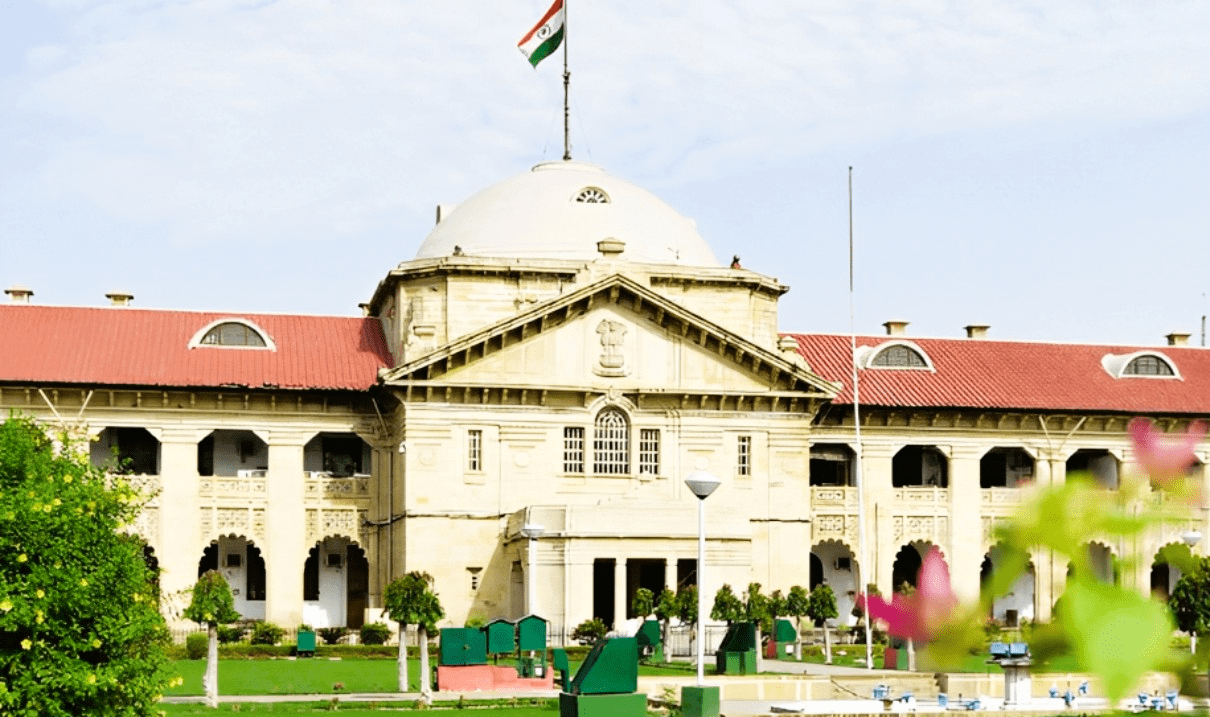
New Delhi: The Oudh Bar Association of the Allahabad High Court’s Lucknow Bench has written to Chief Justice of India Surya Kant, raising concerns over what it described as repeated adverse remarks directed at judges of the Allahabad High Court. The association has sought expunction of certain observations made in a recent Supreme Court judgment.
In its letter to the Chief Justice of India, the association stated that while the Supreme Court exercises appellate jurisdiction to correct errors in judgments, it should refrain from making stigmatic comments against High Court judges. Such remarks, the letter noted, may adversely affect judicial functioning and morale.
The communication follows a recent Supreme Court ruling that set aside a bail order granted by the Allahabad High Court in a dowry death case. In its judgment, the apex court described the High Court’s order as “one of the most shocking and disappointing orders” it had encountered in recent times.
The Supreme Court further observed that it was unable to comprehend the basis on which discretion had been exercised in favour of the accused in a serious offence such as dowry death. The top court termed the bail order a “travesty of justice” while overturning it.
Referring to these remarks, the Oudh Bar Association stated in its letter that while erroneous decisions can be corrected through appellate processes, comments affecting the dignity and capability of judges may have a demoralising impact. It emphasised that criticism should be confined to judgments rather than directed at the judges themselves.

The letter noted that despite established judicial principles advising restraint in such matters, there have been instances where observations by the apex court have extended to the perceived capability of judges whose orders were under challenge. According to the association, such remarks may have a significant psychological impact on the concerned judge.
The association further stated that when the Supreme Court, while exercising appellate or extraordinary jurisdiction, makes stigmatic observations regarding a High Court judge’s decision, it can have a chilling effect on the judge’s functioning. It added that the justice delivery capacity of the judge concerned had been widely appreciated by members of the court-annexed Bar.
Highlighting the issue of pendency, the association pointed out that the Allahabad High Court, both at its Lucknow and Prayagraj benches, is functioning with fewer judges than its sanctioned strength. This, it said, has resulted in an increased workload and mounting pressure on sitting judges.
In this context, the association observed that any adverse remark concerning a judge’s judicial approach could further demoralise the individual, especially in matters such as bail jurisdiction. It noted that the remarks made in the recent judgment had created a chilling effect on the concerned judge at the Lucknow Bench.
Describing the Bar as “the mother of the Bench,” the association stated that it is in a position to assess the performance and working of judges. It added that adverse observations made on the judicial side affect not only the individual judge but also members of the Bar.
The Oudh Bar Association concluded by respectfully requesting the Chief Justice of India to advise accompanying judges to avoid adverse remarks against High Court judges in Uttar Pradesh while deciding cases in appellate jurisdiction. It also urged that the remarks in question be reviewed and expunged in order to uphold the morale and working capacity of judges at the Allahabad High Court and to maintain a transparent, fearless and independent judicial system in the interest of justice.